From farm to brand
Frutika and the Kress family's business journey
FRUTIKA · GRUPO KRESS
A business study based on public sources and published interviews. Company accounts are distinguished from this magazine’s analysis.
Sources reviewed: 21 October 2026Introduction
Turning the ability to grow fruit into a product customers keep choosing requires work on processing, pricing, distribution and the continuity of management.
How many decisions stand between growing fruit and selling a drink consistently?
Frutika belongs to Grupo Kress, a business group with agricultural roots. Its story connects farming with products for domestic and international customers. It also includes a commercial initiative that was set aside and later tried again. [S01] [S07], [S02], [S03]
This issue examines that journey through three questions: how to produce, how to find buyers and how to keep a business going. It draws on public sources and previously published interviews. The participants' accounts are distinguished from this magazine's analysis.
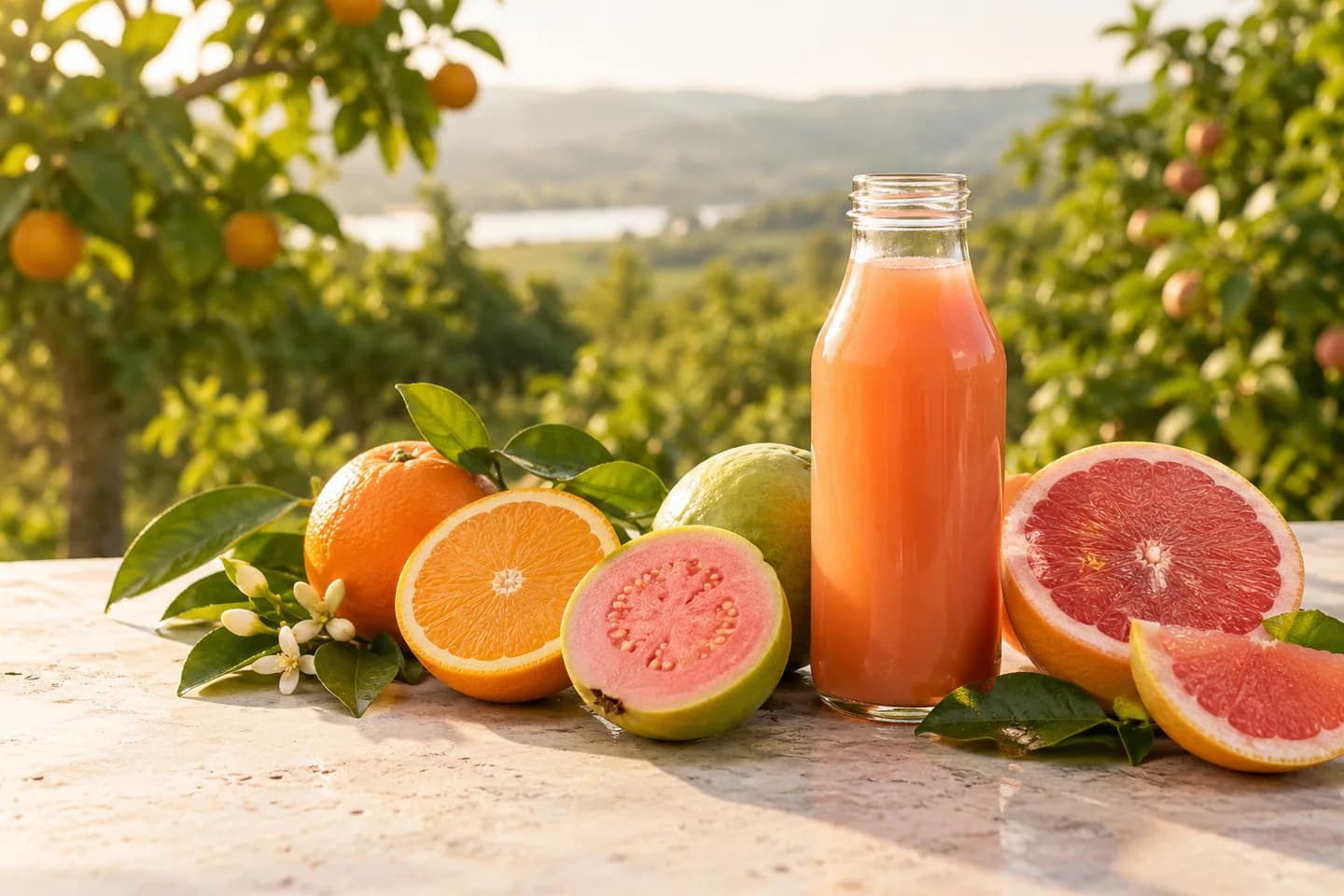
Fruit and an unbranded container illustrate the link between farming and a finished product.
AI-generated illustration. Not a photograph of actual Frutika or Grupo Kress products, facilities, management or employees.
Understanding a business through one drink
When choosing a drink, we notice its flavour, price, packaging and brand. The people who grew the fruit, the processing plant and the transactions behind it are less visible.
Frutika is based in Kressburgo, in the district of Carlos Antonio López, Itapúa, Paraguay. REDIEX dates its establishment to 1997 and describes it as part of Grupo Kress, producing and selling juices and nectars. [S02], [S04]
Nectarnote 1 is a category of drink made with fruit juice or pulp and other ingredients. Understanding Frutika also means looking at fruit concentratesnote 2, which can serve as ingredients for other products. ABC Color's 2025 report describes both activities. [S05]
The same fruit can reach a consumer in a packaged drink or be sold to another business as an ingredient. These are different customers with different purchasing decisions. Packaging may matter greatly in one market; meeting an agreed specification and delivery date may be central in another.
Our analysis: Understanding a brand begins with identifying its buyer. The size of a farm or factory does not, by itself, explain who chooses its products or why. Frutika's journey offers a way to consider the whole route from production to customer.
A scene for considering fruit growing. It does not identify real land or a location.
AI-generated illustration. Not a photograph of actual Frutika or Grupo Kress products, facilities, management or employees.
From farming to processing: the 1997 turning point
Grupo Kress's official history says that German-born Heinfried Wolfgang Kress moved to Paraguay in 1977 and invested his savings. The group's website identifies 1978 as the beginning of its business journey. [S01] [S07]
Frutika was established in 1997, adding fruit processing and product sales to an agricultural foundation. [S02]
| Year | Milestone described by the sources |
|---|---|
| 1977 | Heinfried's move to Paraguay, according to the official history. |
| 1978 | The starting year given by Grupo Kress. |
| 1997 | Frutika's establishment, also recorded by REDIEX. |
The public sources reviewed do not explain every reason behind the move into processing. We could not establish the first customer, the initial equipment investment or the split between the owners' funds and borrowing. The reference to the founder's savings does not establish that Frutika's entire factory was financed with his own money.
Our analysis: Processing fruit broadens the range of products a business can sell. It also adds responsibilities: equipment that delivers consistent quality, staff training, packaging supplies and buyers. Taking on more stages means coordinating more work.
For example, a larger harvest will not necessarily produce a proportionate increase in sales if processing capacity and the customer base remain unchanged. This is a general challenge in connecting farming and manufacturing, not an event attributed to a particular year at Frutika.
Owning farmland can provide a starting point. The next task is to decide what to deliver, to whom and in what quantity.
A fictional scene illustrating sorting and careful handling.
AI-generated illustration. Not a photograph of actual Frutika or Grupo Kress products, facilities, management or employees.
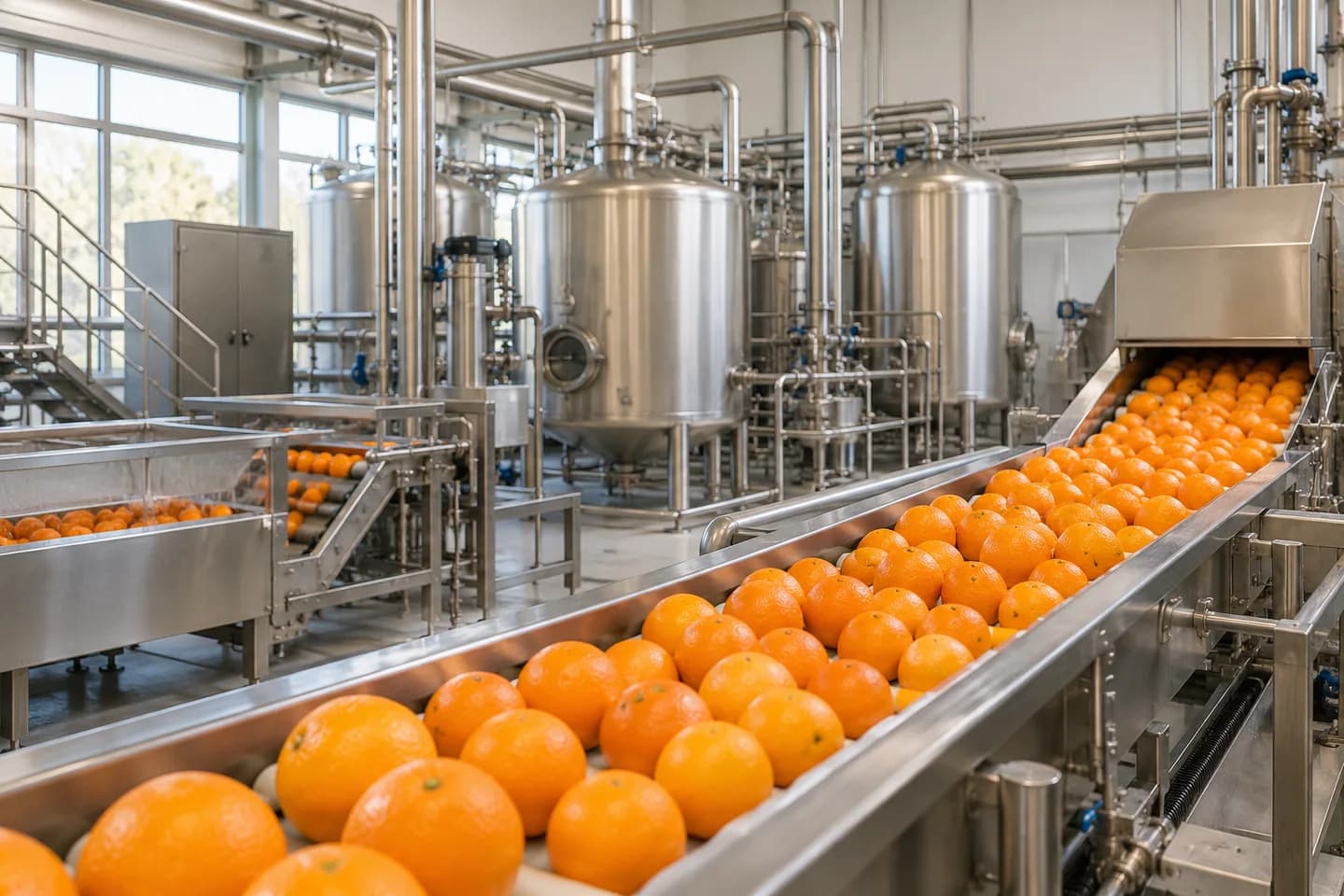
Processing adds work involving equipment and quality. The equipment layout is illustrative.
AI-generated illustration. Not a photograph of actual Frutika or Grupo Kress products, facilities, management or employees.
In the following chapters
The following chapters explore a mismatch between price and market, another attempt, supply coordination and the handover of management.
- Being liked does not always mean making a sale
- Connecting raw materials, the factory and customers
- Keeping the business going across generations
- Before entering the next market
Term notes
Nectar
a category of drink made with fruit juice or pulp and water, with other possible ingredients. It does not mean the same as 100% juice. Check the label for a particular product's composition.
Back to the text ↑Fruit concentrate
juice with some of its water removed, used as an ingredient for drinks and other products. Trading concentrate should be distinguished from selling packaged beverages.
Back to the text ↑
Sources consulted
The period covered by each source, company accounts and plans are distinguished from current results. We did not conduct a new visit or interview for this article.
- S01 Grupo Kress official history ↗
(publication dates not shown). The company's account does not replace registration records establishing ownership or current legal authority. - S02 REDIEX, “FRUTIKA” ↗
(date not shown). An institutional presentation of the brand. - S03 Club de Ejecutivos, “Frutika apuesta por la sustentabilidad” ↗
, Graciela Murano, dated 25 March 2019. A participant's account; relative time references are not converted into exact dates. - S04 REDIEX, “Frutika concreta negocios en feria de productos orgánicos” ↗
, 7 March 2024. Reporting with company statements, rather than shipping or profit records. - S05 ABC Color, “Frutika: sembrando innovación, cosechando éxito” ↗
, Noelia Leguizamón, 1 October 2025. A reported visit including company explanations and plans; not audited financial statements. - S06 La Nación, “Frutos del éxito” ↗
, 2 August 2016. Used narrowly for accounts of organisation and supply. Its praise and historical scale figures are not presented as current facts. - S07 Grupo Kress — Home ↗
Publication date not shown