Inverfin: the management behind an easier purchase
Seeing products, payments, stores and inventory as one system
INVERFIN
A business study based on public sources. Company statements and third-party analysis are distinguished from our application of management theory.
Sources reviewed: 29 October 2026Before reading about Inverfin
When a business wants to sell more, product range and advertising often come first. Yet the reasons customers hesitate are not always about the product. Payment timing, delivery and help when something goes wrong also influence their choice.
Inverfin, a Paraguayan business selling appliances and motorcycles, combines product sales with financing for purchases.[S01] Its case provides a way to examine the activities that make buying easier and the inventory, information and funding needed to support them.
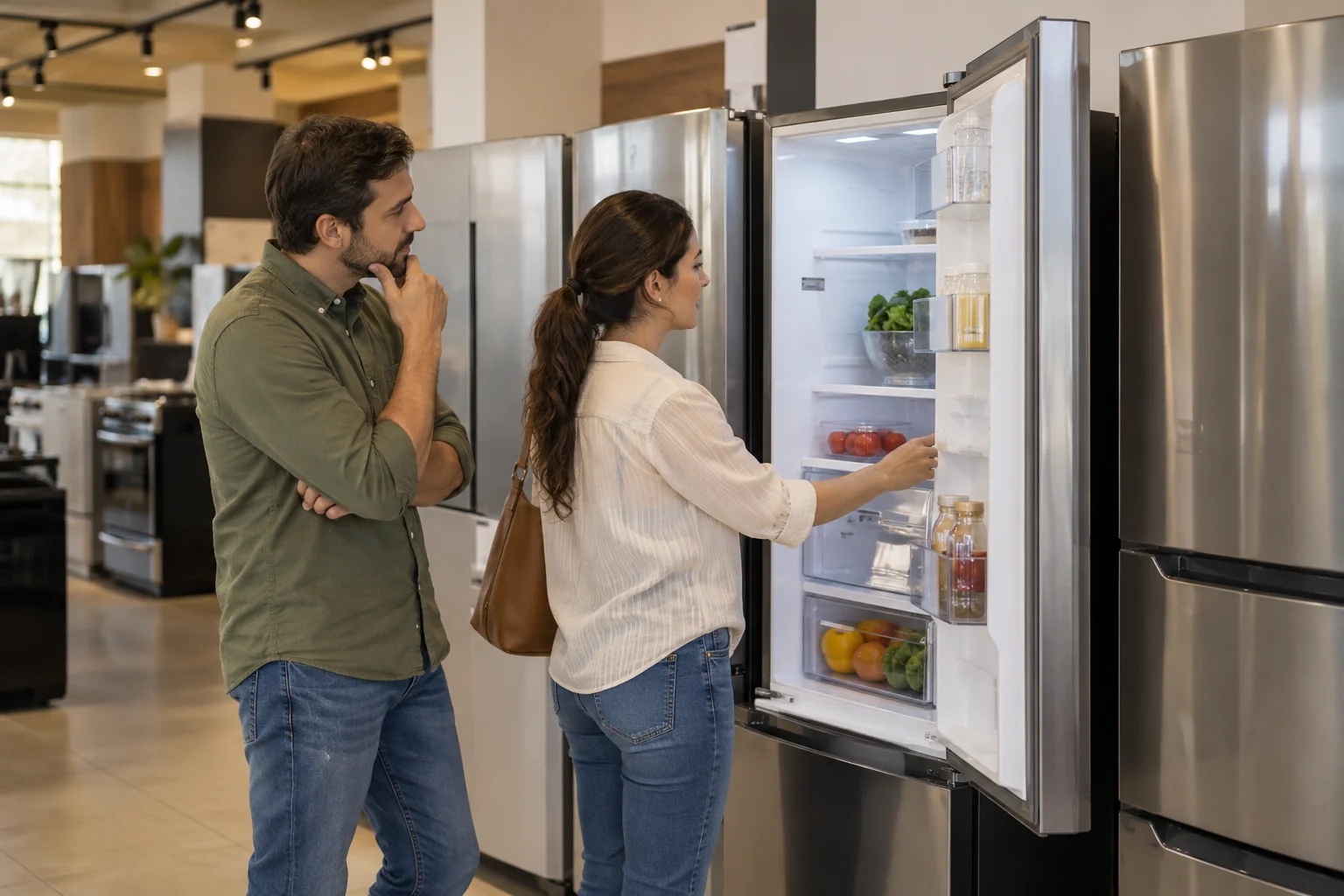
Payment, receipt and support arrangements can change how easy it is to buy the same product. AI-generated illustration. People, stores and facilities are fictional; this is not a photograph of Inverfin.
The aim of this article is to connect what happens before, during and after a sale. You do not need a large company's infrastructure to review the steps customers face or the time your business takes to collect payment.
| Perspective | Connected activities |
|---|---|
| The customer | Choose → pay → receive → keep using |
| The company | Buy stock → hold inventory → sell → collect |
| What connects them | Product and transaction information; coordination between people |
1996: starting with a small local shop
Inverfin's company profile traces the start of its business to a small motorcycle and spare-parts shop in Coronel Oviedo in 1996. The broad household product range associated with the company today was not there from the outset.[S02]
According to Feller Rate's 2026 report, the founders established DIMAR S.R.L. Its investors acquired Inverfin in 1998; Inverfin then acquired DIMAR, and the business expanded into appliances.[S03] Here, 1996 marks the origin of the current business. It should not be confused with the incorporation date of the legal entity.
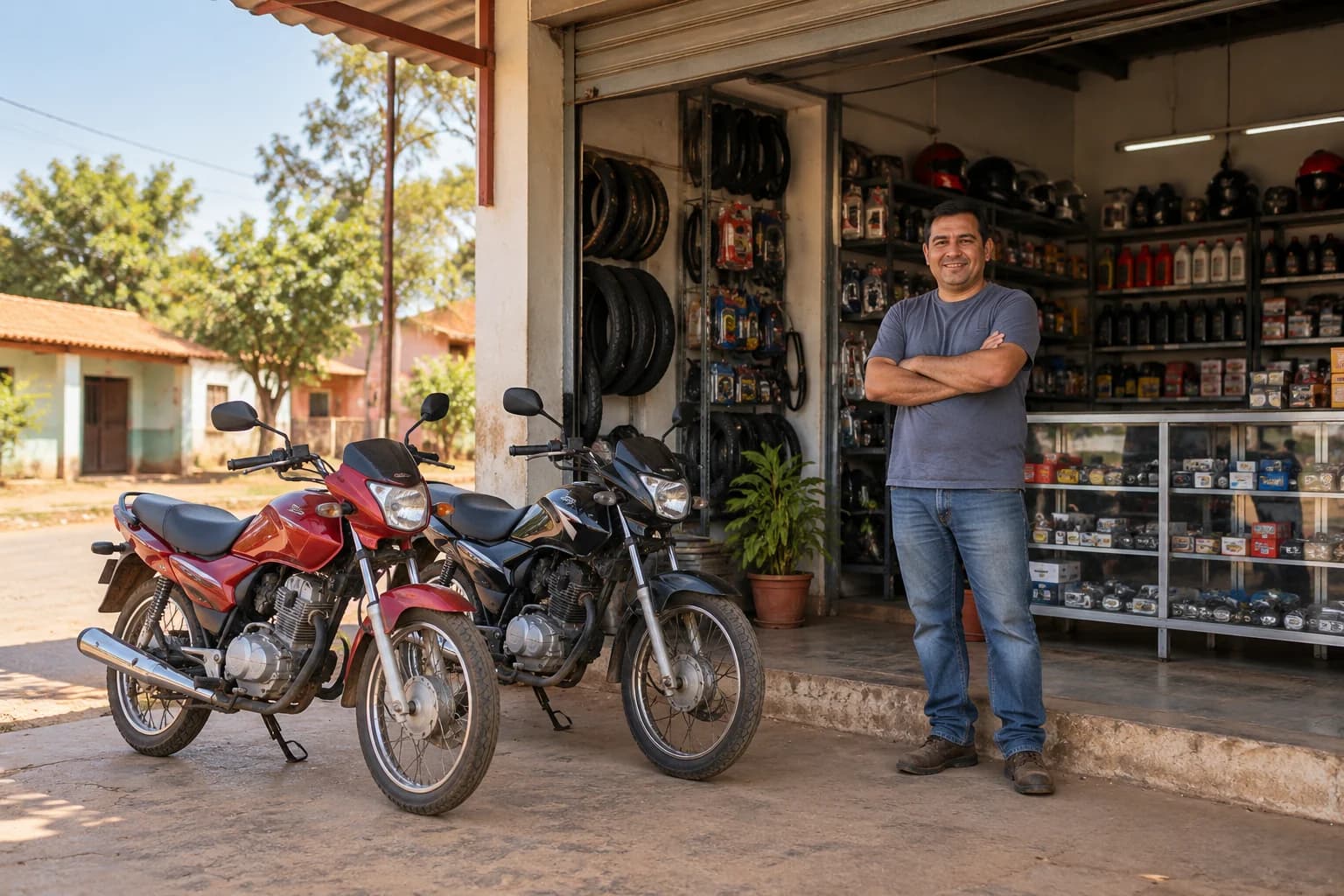
A generic motorcycle and parts shop illustrates a business starting point. It does not recreate the actual 1996 store. AI-generated illustration. People, stores and facilities are fictional; this is not a photograph of Inverfin.
The sources reviewed did not establish the founders' individual backgrounds or the amount of initial capital. Today's scale cannot tell us what resources they started with or what they were thinking.
PI analysis Before asking how to become a business that sells everything, consider which customer and purchase occasion to begin with. When adding a product category, the investment and management required also depend on what it can share with existing customers and sales processes.
Combining the product with payment terms
Inverfin's business includes both selling products and financing their purchase.[S01] From the customer's perspective, finding the right item may not be enough if the full price is unavailable at that moment.
We interpret this combination through the idea of a value propositionnote 1. The same refrigerator can be easier or harder to buy depending on its price, payment dates, delivery and contact for questions. This is a general illustration of the mechanism, not a finding from a survey of Inverfin customers.

Making buying easier requires clear explanations and work to sustain the terms offered. AI-generated illustration. People, stores and facilities are fictional; this is not a photograph of Inverfin.
Making purchases easier also creates work for the company. Collecting instalments involves assessing repayment capacity and dealing with unpaid amounts. A smaller monthly payment alone does not ensure a suitable transaction for both parties.
Providing financing directly or using external payment and finance services is another design choice. The comparison should cover more than fees: who assesses applications, collects payment, provides the necessary funds and explains the terms to customers?
In the following chapters
The following chapters connect stores, logistics and information, explain the difference between sales and cash, and review support after purchase. Register for free and confirm your email to return here and read all six chapters.
- Connecting branches into one system
- More sales can also require more cash
- Management continues after the sale
- Three questions to take back to your business
Term notes
Value proposition
A promise to address a particular need for a particular customer. Here it includes the product and the arrangements for payment, receipt and help.
Back to the text ↑
Sources consulted
Sources checked on 29 October 2026. We did not interview the company directly. Corporate statements, reporting and third-party analysis are cited and distinguished from PARAGUAY INSIGHT's interpretation.
- S01 Feller Rate: public analysis of Inverfin ↗
2 October 2026
Business activities, first-half 2026 revenue growth, inventory and working capital. A rating agency's analysis, not an audit. - S02 Inverfin: Nosotros ↗
No publication date stated
The company's own profile. It traces the current business to motorcycle and spare-parts sales in Coronel Oviedo in 1996. - S03 Feller Rate: Inverfin report hosted by the BCP ↗
Corrected version dated 5 October 2026
History on PDF page 3; branch and logistics network on page 6. Reference financial statements are dated 30 June 2026. This is not a management assessment by the BCP itself. - S04 Última Hora: interview on Inverfin's management ↗
21 December 2016
Comments by the then-president. The newspaper uses 'Eduardo Rempel'; the official profile uses 'Eduard Rempel'. We follow the official form. - S05 Harvard Business School / ISC: The Value Chain ↗
No publication date stated
Explanation of value-chain theory. Not an assessment of Inverfin. - S06 Inverfin: Bocas de cobranzas ↗
No publication date stated
Official payment-channel information. Terms and costs vary by channel. - S07 Inverfin: Centro de ayuda ↗
No publication date stated
Official guidance on online shopping, delivery and warranties. Not an independent measure of service performance. - S08 Harvard Business School / ISC: Fit Across the Value Chain ↗
No publication date stated
Explanation of fit between activities. Applying it to Inverfin is this publication's analysis.