Sara packed the yerba and Lauro made the deliveries
Sara and the women who worked with her sealed their paper packets with a paste made from cassava starch. They weighed out the yerba mate, the dried leaves used to make the South American drink known as mate, and packed it tightly. Sara’s husband, Lauro, gathered the packets into large jute sacks and delivered them to nearby settlements. This is how Pajarito, the Paraguayan yerba mate company, remembers its early days. [S02]
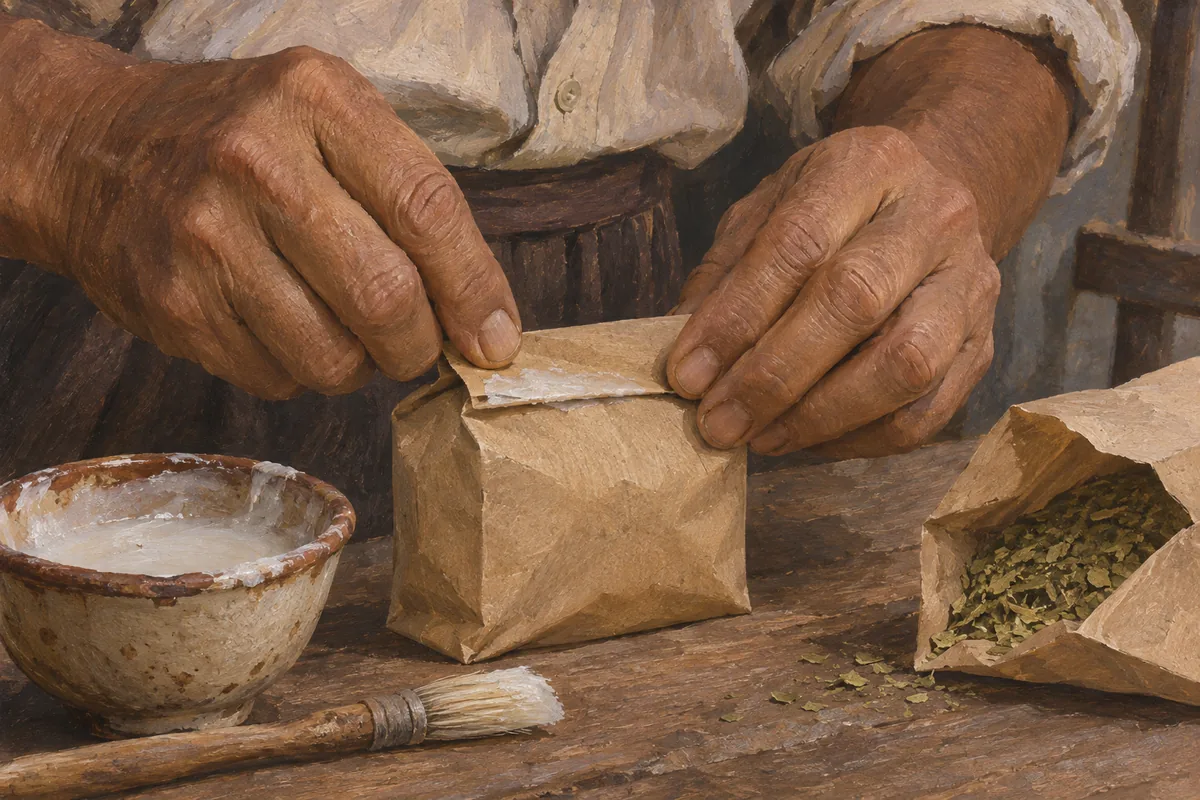
In 1956, Lauro Raatz and Sara Ulbrich ran a small shop across from a school in Bella Vista, in the southern Paraguayan department of Itapúa. They sold sweets for the children. Lauro’s father, Gustavo, grew yerba mate there, and the couple sold the processed leaves by weight. [S01] [S03]
At the counter, they could weigh out the yerba and hand it straight to a customer. How could they get it to a family in a distant settlement in equally good condition? According to the company, packing it tightly in a sealed paper bag served two purposes. It made the yerba more presentable and protected it on the journey. Pajarito dates the start of hand packing to 1958. Its history credits a team of 25 women led by Sara with filling 300 packets a day. [S01] [S02]
The bags came in two useful sizes. Sara’s team handled the packet that a family would open. Lauro handled the sack that could carry many of those packets on a single delivery. [S02]
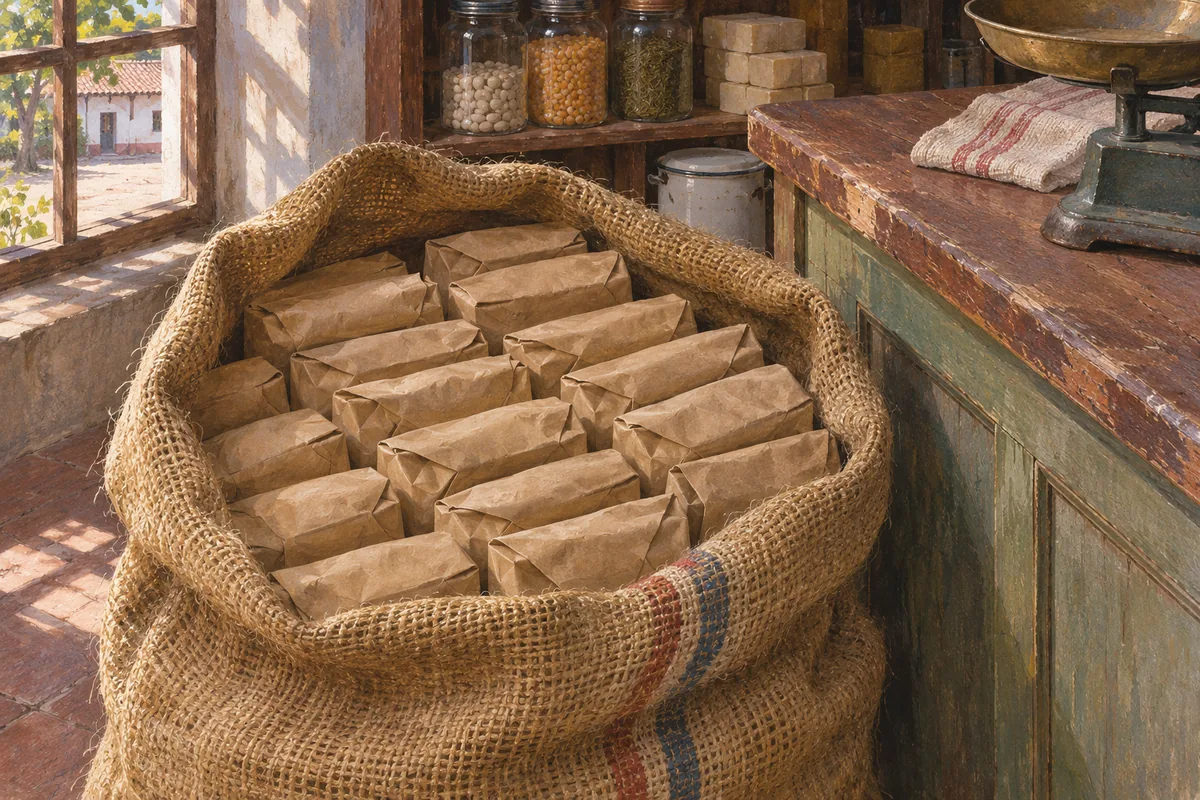
Who buys the yerba, and how much at a time?
Pajarito’s history records two new customers in the 1970s. In 1975, it began selling yerba in 50-kilogram sacks to Mennonite cooperatives in the Chaco, in western Paraguay. In August 1976, a buyer named A. M. Reguera purchased packets of Pajarito to sell in Asunción, the capital. [S01]
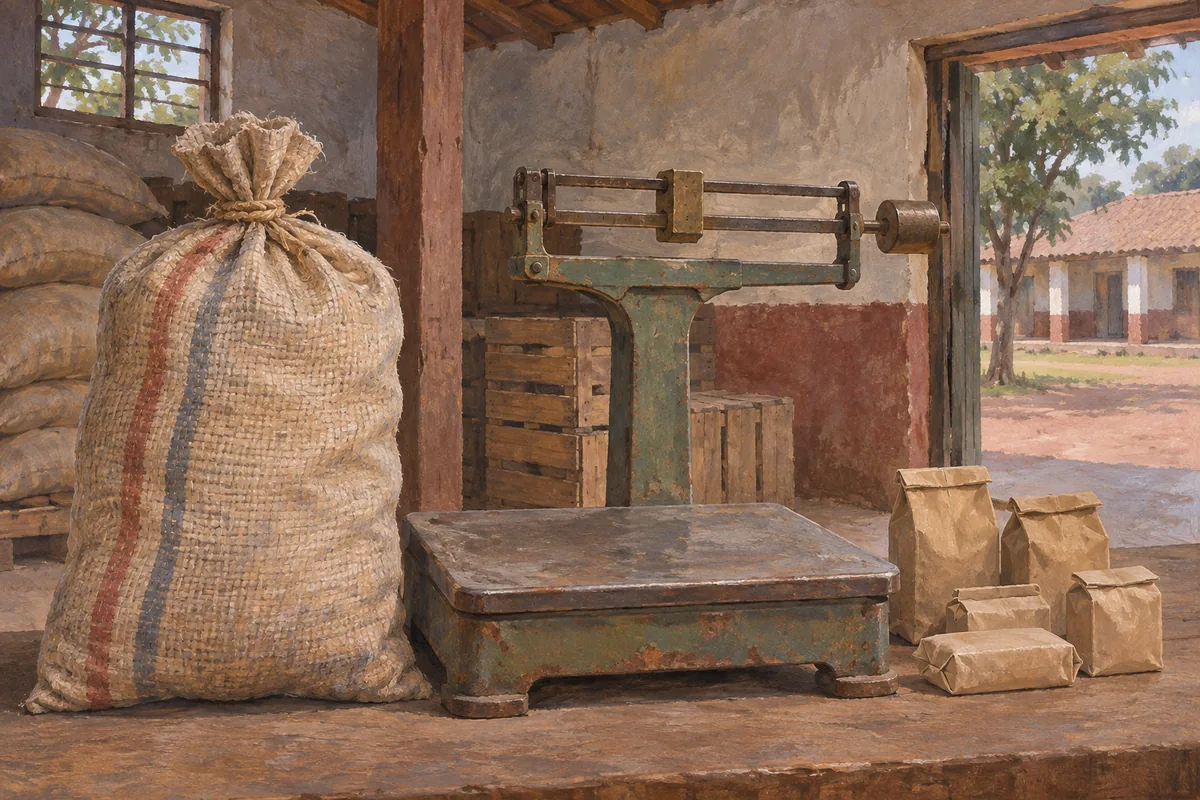
At the shop across from the school, the couple could see who was buying the yerba. A cooperative took delivery 50 kilograms at a time. In the capital, one person bought stock to resell, and someone else would eventually take a packet home. For a producer choosing pack sizes, the question is who will handle the goods at each step. A wholesale buyer and the person who opens a packet at home need different sizes. [S01]
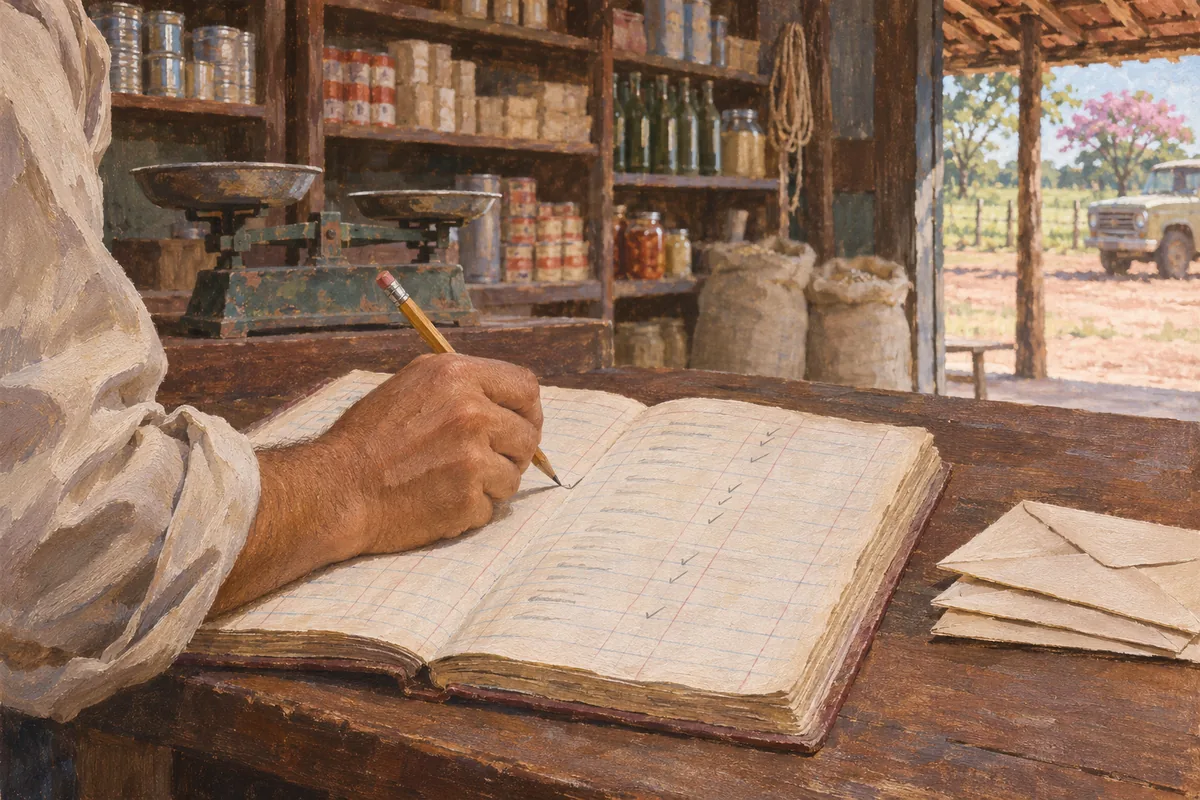
There was work to do back at the shop, too. Lauro and Sara had three daughters, Úrsula, Marisa and Mirian. In a 2021 television interview, Úrsula recalled helping her father keep the accounts and pay the employees of the family’s general store when she was young. When her father was away, she took over. What she remembered fondly was the time the job gave her with people. [S03] [S04]
Chapters 3 to 5
- The year a little bird appeared on the white packet
- Wooden crates bound for Taiwan and a taste at a Tokyo shop
- How does the next generation learn the family business?
Sources consulted
Sources reviewed November 24, 2026. This feature draws on publicly available sources and published interviews. Interviewees’ remarks are paraphrased.
- S01 Company history ↗
Pajarito, “Historia.” The company timeline covers the shop in 1956, hand packing in 1958, buyers in Paraguay, the packing machine order and shipments to Taiwan and Japan.
- S02 Account of the early packaging ↗
Pajarito, “Los inicios de Yerba Mate Pajarito.” The company’s account of its early packaging explains the purpose of the packets, the cassava-starch paste and Lauro’s deliveries in jute sacks.
- S03 Magazine PDF ↗
Marcelo Codas Frontanilla, “Don Lauro Raatz,” CEO py, pp. 38–39. The profile covers the yerba grown by Lauro’s father, early hand packing, exports and the founders’ three daughters.
- S04 Family members’ accounts ↗
La Nación, November 19, 2021, “Yerba Mate Pajarito cumple 65 años de tradición familiar en el mercado.” A report on Úrsula Raatz’s and Tanya Soley’s recollections on GEN’s Residentas.
- S05 Museum report ↗
La Nación, February 26, 2021, “El Museo Raatz, un lugar lleno de historias valiosas.” A report on the museum in Bella Vista and its exhibits, with an account from a local guide.
- S06 Shop announcement ↗
AsianMeal, “アジアじゃないけど,” July 4, 2012. The Fuchu shop’s own announcement gives the pack size, price at the time, preparation instructions and invitation to taste the drink.
- S07 Interview with Mirian Raatz ↗
Última Hora, September 19, 2015, “Firma innova con nuevos productos a base de yerba mate.” Mirian Raatz describes the samples offered at a food and drink fair and how customers could prepare the drink at home.